

Super-insulated, natural & carbon-negative
wall panels for healthier, energy-efficient homes.
Super-insulated, natural & carbon-negative
wall panels for healthier, energy-efficient homes.
High Performance
from inside to outside
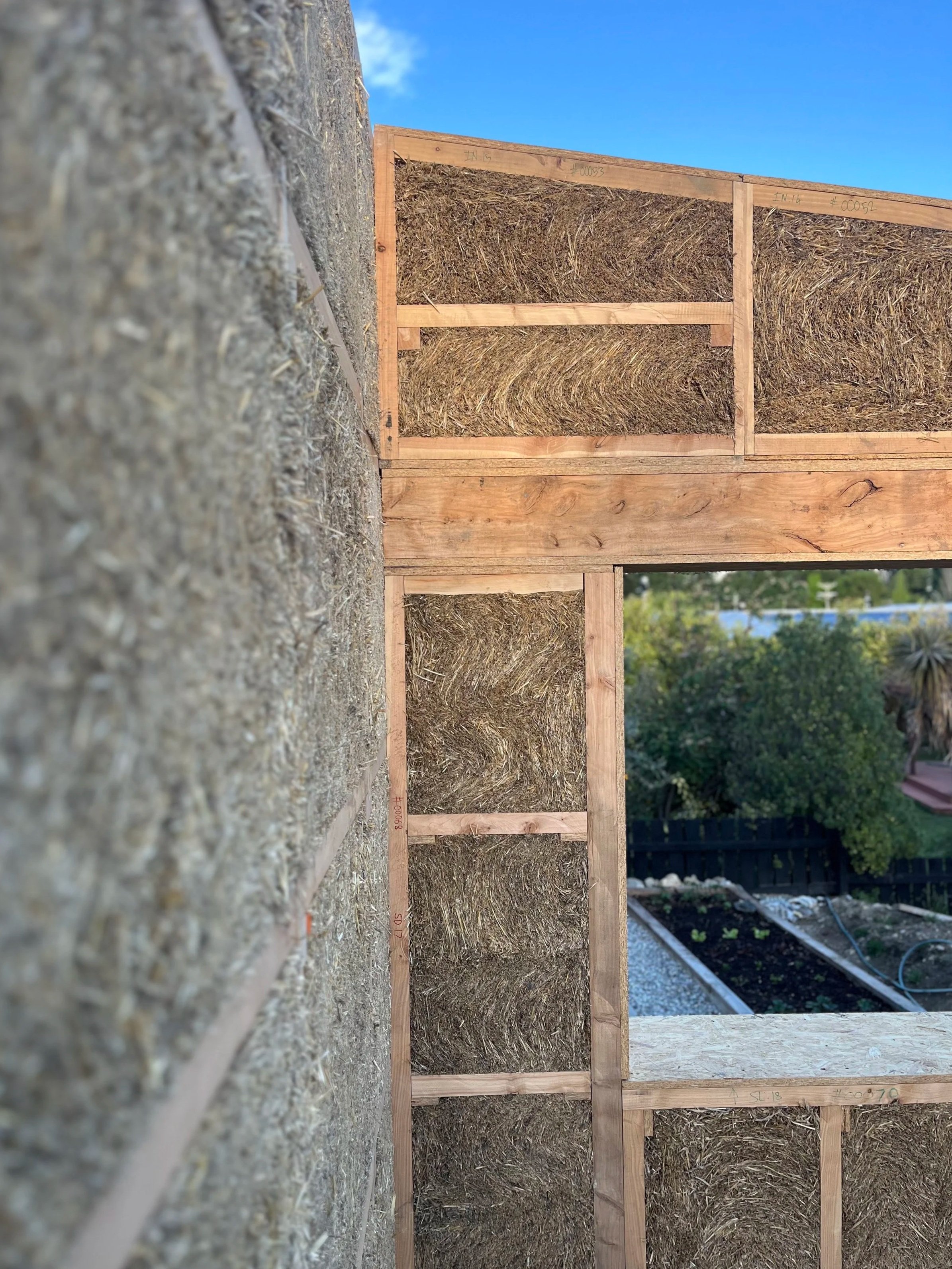
StrawSIPS panels combine generations of strawbale building knowledge with the latest advances in building physics and building biology, and are precision manufactured in a factory for accuracy and consistency.

Engineered to deliver outstanding thermal performance

Vapour open construction for long term durability

Natural VOC-free materials that ensure fresh, healthy air
-
Modular
Panels designed and engineered to adapt to any building size and shape
-
High R-value
An R-value up to 6.2 is more than twice the New Zealand standard and suitable for Passive House standards
-
Low Carbon Construction
Built with sustainable forestry timber and carbon-sequestering straw from local sources
-
Affordable construction
Quick and easy assembly with straightforward details and instructions
-
Breathable materials
Combine with interior clay plaster and exterior woodfibre to regulate humidity and maximise durability
-

Standard Panel
The most common panel. Standard widths are 900, 800 and 600mm, although any size between 400-900mm can be built. Wall heights of 3000mm are possible with a single panel.
-

Inclined Panel
Used for gable or inclined walls and matched to the roof angle (between 5 - 45 degrees). Standard widths are 900, 800 and 600mm, although any size between 400-900mm can be built.
-

Sill and Head Panel
Used above or below window and door openings where necessary and standard panels can’t be used. Heights of 1200mm are possible, and widths up to 3000mm.
Comparison of Building Methods
|
Best Performance
StrawSIPS
|
Timber Frame Construction
|
Polystyrene SIPs
|
|
|---|---|---|---|
| Natural Untreated Materials | |||
| Natural Untreated Materials | Straw insulation, untreated cypress timber (or low-emissions LVL) and untreated OSB | Treated timber, often used with petrochemical insulation batts, and numerous glues and adhesives, formaldehyde in many materials | Petrochemical based insulation (EPS, XPS, PIR), plywood or OSB and adhesive foams to join panels, large potential for off-gasing VOCs |
| VOC's | |||
| VOC's | Natural, unprocessed materials that don't release toxic and carcinogenic VOCs into your home | Typical glues, adhesives, insulation, paints, plasters and other interior materials used in NZ are often toxic to humans | Polystyrene, polyurethane insulation, sealed with spray foams is the opposite of a natural, healthy building. Often finished on the inside with the same toxic materials used in timber frame building |
| Ease of Build | |||
| Ease of Build | Fixed price cost for the panels, delivered and installed by any builder or owner-builder in a few days. Straightforward instructions and only a few types of screws used to install | Often delivered by a Frame Supplier, easy to install if you have some knowledge and experience building | Delivered in panels to site, requires numerous other materials to correctly install and get an airtight building |
| Cost | |||
| Cost | Fixed price costs for panels, low labour cost of install, and known costs of additional wall materials | Known cost of frames and quick installation, although remaining materials including insulation have highly variable labour and material costs | Known cost for panels and quick install, although highly variable labour and material costs for the rest of the wall system |
| Vapour Permeability | |||
| Vapour Permeability |
|
|
|
| Insulation and Minimal Thermal Bridges | |||
| Insulation and Minimal Thermal Bridges |
|
|
|
| Carbon Negative | |||
| Carbon Negative | |||
| Indoor Air Quality | |||
| Indoor Air Quality |
|
|
|
| Acoustic Insulation | |||
| Acoustic Insulation |
|
|
|
| Ease of Installation | |||
| Ease of Installation |
|
|
|
Exterior and Interior Finishes
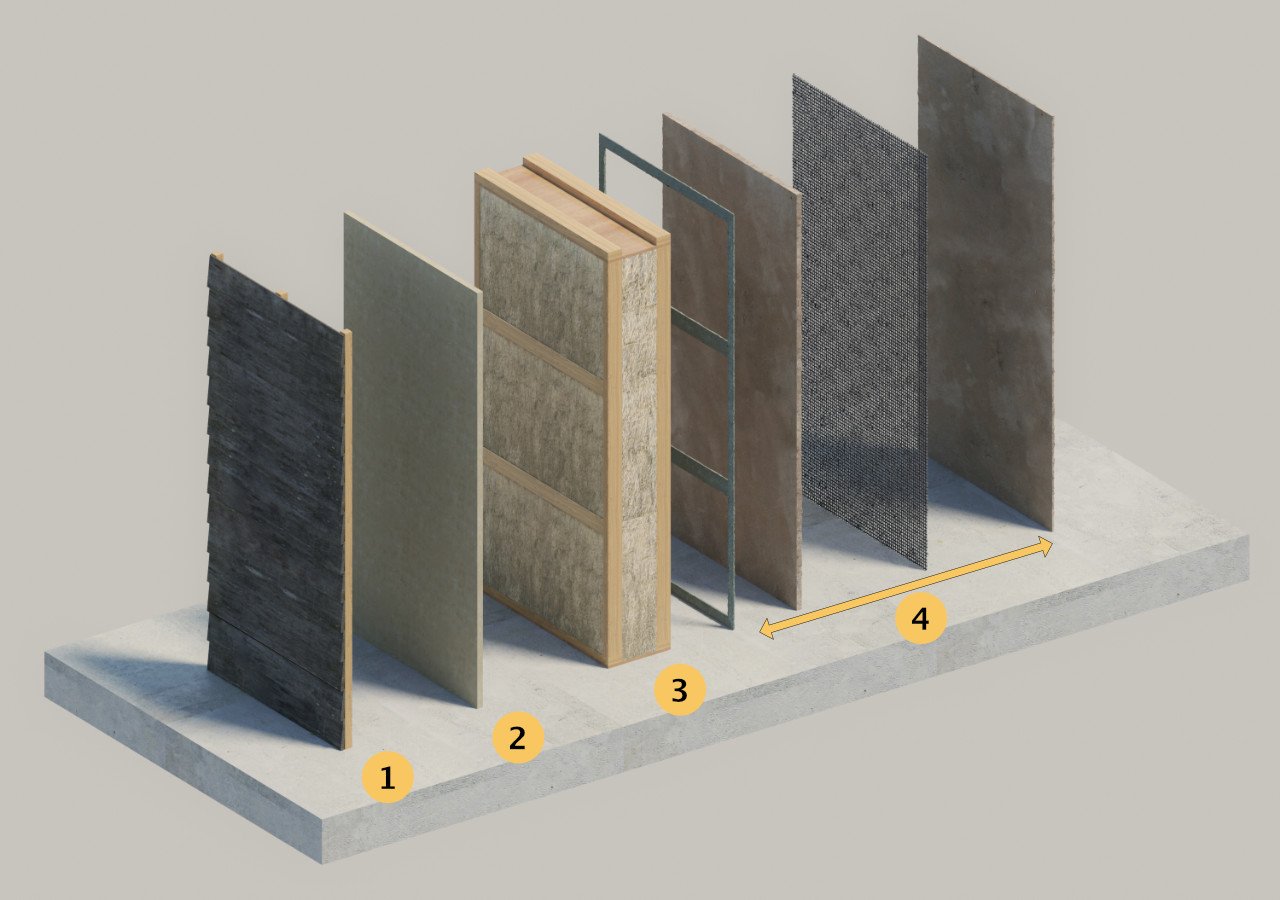
Cladding
1
There are two main cladding options we recommend:
ventilated cladding on cavity battens - the most common, durable and flexible option with timber, metal or stone/brick available
lime plaster - the traditional method for strawbale houses, either applied over woodfibre board or directly to the straw
Rigid Air Barrier
2
Woodfibre rigid air barrier protects the straw from the elements and can provide extra insulation if required. Vapour permeable and made with natural materials, just like the StrawSIPS panels it protects.
It can also provide a rough surface to directly apply a lime plaster if desired.
StrawSIPS Panel
3
400 mm thick walls provide all of the loadbearing structural support as well as insulation
Clay Plaster
4
The most suitable internal lining that can be applied directly to the straw in multiple mesh reinforced layers up to 50mm thick.
Alternative cladding options are possible in wet areas or if a different look is preferred.
and more technical details
-
R6.0+ Thermal Insulation
The 40cm wall thickness and high performance of compressed straw as an insulator means our panels far exceed the standard R value of almost all new houses in NZ.
-
120+ minute Fire Resistance
Despite the common though that straw houses will burn down, they are actually extremely fire resistant because the straw is so highly compressed leaving no oxygen for the fire to burn. Clay and lime plasters are also fire proof and protect the building even further.
-
40+ dB Acoustic Insulation
Straw bale houses have a totally different feel to them compared to traditional stick frame timber construction. They are quiet and comforting, and external noise is often completely eliminated.
-
Structural Performance for NZ Code
The structural double timber frame bears all of the load, simplifying the engineering, and can easily be designed for multi-storey buildings. In most cases this follows standard engineering practice for timber frame buildings (NZS3604) but also incorporates knowledge and details from the NZ Earth Building Standards (NZS 4299, 4298, 4297).
-
Precise and Reliable Construction
Factory prefabrication allows for precise and repeatable production of panels in a controlled and dry environment. On site time and labour is reduced, reducing the cost and overall build time. Mechanically compressed straw with a uniform density and no thermal bridges throughout the panel reduces cold spots in the wall.
-
Durable and Weathertight
Natural materials and modern techniques have allowed for a system of straw bale building that doesn’t compromise any of the natural, healthy, breathable properties and improves the weathertightness of the building and reduces that chance of weather related damage to the structural and straw elements.